What to Do If Your Student Visa Is Delayed: Steps to Take and Who to Contact
Is your student visa delayed? Learn the common causes, the steps to take, who to contact, and how to protect your place at university while you wait.
Introduction
You applied for your student visa on time, your course starts soon, and the decision still has not arrived. A delayed visa is one of the most stressful parts of studying abroad — your flights, your accommodation, and your place at university can all depend on it. The good news is that delays are common, and in most cases there are clear steps you can take. This guide explains why visas get delayed, what to check first, who to contact, and how to protect your enrolment while you wait.
Why student visas get delayed
Visa delays happen for many reasons, and most of them are not your fault. The most common cause is simply volume: embassies and visa centres receive far more applications before the start of term, and processing times stretch. Your application may also be delayed because an officer needs extra time to verify a document, such as a bank statement, a qualification, or a sponsor letter. In some cases, the delay comes from a missing document or an unclear answer on the form, which means the application is held while more information is requested. Security checks and administrative processing can also add time. Because processing times vary by country, by season, and by individual case, the only reliable figure is the one published on the official website of the embassy or immigration authority handling your application — check it there, not on forums or social media.
Step one: check the status and the published processing time
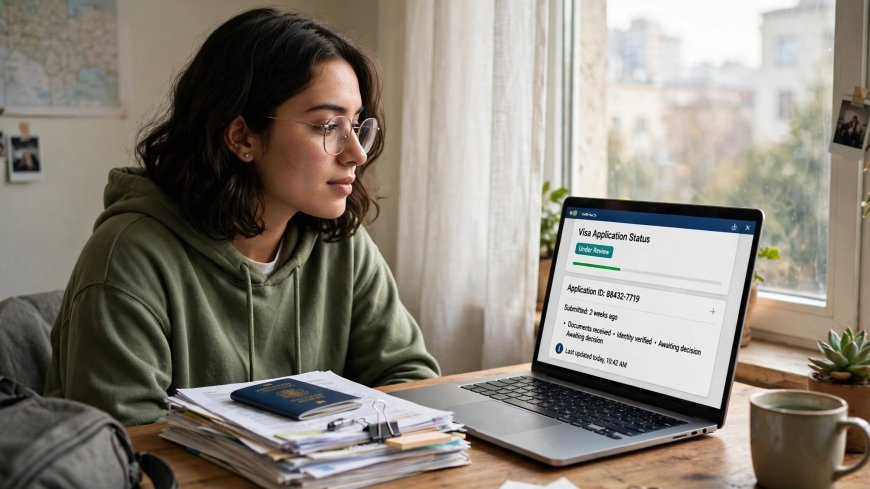
Before you worry, check the facts. First, find out whether your application is actually late. Look up the current published processing time for your visa type on the official embassy or immigration website, and compare it with the date you submitted your application and gave your biometrics, if that was required. Processing times are usually counted in working days from the biometrics appointment, not from the day you filled in the form. Next, check the status of your application through the official tracking service, if one is available for your country. If the published processing time has not yet passed, the honest answer is usually to wait a little longer — most applications are decided within the published window.
Step two: check that nothing is missing
If the published time has passed, the next step is to make sure your application is complete. Log in to the application portal or check any emails from the visa office, including your spam folder, for a request for more documents. A common reason for a hold is a document that was unclear, out of date, or in the wrong format — for example, a bank statement that does not cover the required period, or a letter that is missing a signature. If you find a request, respond quickly and exactly as asked, and keep copies of everything you send. If you applied through a visa centre, you can also ask the centre whether your file is complete and whether anything is outstanding. Do not send the same document twice unless you are asked to, as that can slow things down rather than speed them up.
Step three: contact the right people, in the right order
If your application is complete and the published time has passed, it is time to ask questions. Start with the official enquiry service of the embassy or immigration authority — most have a contact form, an email address, or a paid helpline, and the details are on their official website. When you contact them, have your application reference number ready, along with the date you applied and gave biometrics. Next, tell your university. The international office or admissions team deals with delayed visas every term, and they can advise you on your options — including whether your start date can be moved, whether you can join classes online for the first weeks, or whether your place can be deferred. Contacting your university early matters: they can only help if they know about the delay.
What to do about flights, accommodation, and your course start
While you wait, do not make expensive commitments you cannot change. Avoid booking non-refundable flights or paying large deposits on accommodation until your visa is granted, or book only options that can be changed or cancelled. If your course start date is approaching, ask your university whether late arrival is possible and what the latest date is — many universities allow students to arrive a week or two late, but there is usually a cut-off. If you cannot arrive in time, ask about deferring your place to the next intake; this is a normal request and universities handle it regularly. Keep records of every message you send and receive — dates, reference numbers, and the names of anyone you speak to — so you can show a clear timeline if you need to escalate.
What not to do while you wait
Do not submit a second visa application for the same course while the first is still being processed, unless the official guidance tells you to — duplicate applications can confuse the process and cause further delays. Do not trust agents or websites that promise to speed up a visa for a fee; only the embassy or immigration authority can decide your application, and paying a third party cannot change its place in the queue. Do not travel to the country on a different visa, such as a tourist visa, with the plan of switching to a student visa on arrival — the rules on this vary, and in many countries it is not allowed, so check the official guidance before you consider it. And do not panic about a delay of a few days: processing times are estimates, and a short delay is usually just that — a delay, not a refusal.
What to check before you apply next time
- The published processing time on the official embassy or immigration website, and the busiest months to avoid
- Whether biometrics, an interview, or a medical check is part of your application, and how long each step takes
- That every document is complete, current, and in the format the embassy asks for
- The university's latest arrival date and deferral policy, in case of a delay
- The official tracking and enquiry channels for your visa, so you know where to check
Conclusion
A delayed student visa is stressful, but it is also common — and most delays end with the visa being granted. Check the published processing time, make sure nothing is missing, contact the official enquiry service, and tell your university early. Protect your money by avoiding non-refundable bookings, and do not let anyone charge you for a shortcut that does not exist. With a clear timeline and the right contacts, you can manage the wait and still start your course.